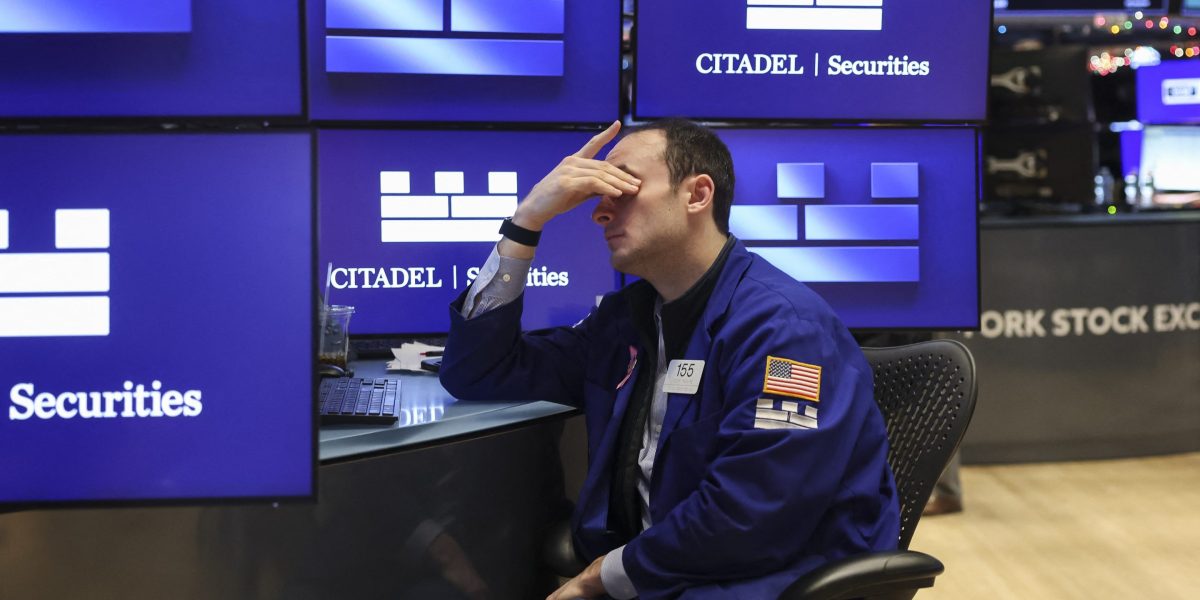
Stocks tumbled Monday morning, led by tech stocks, after leading artificial intelligence CEOs called for a slowdown in the pace of developing the revolutionary technology.
Early on in the trading session, the Nasdaq 100 index, which tracks the 100 largest non-financial companies traded on the Nasdaq exchange, fell as much as 1.8%. The broader Nasdaq Composite index fell as much as 1.3% and the S&P 500 fell almost 1%.
But a late morning rally in software and cybersecurity stocks brought major indexes off their lows. By noon ET, the Nasdaq Composite and S&P were down by only 0.3%.
Those industries have been battered this year due to worries that AI could severely disrupt their business modesl. But the slowdown advocated by AI’s top CEOs appeared to ease these worries somewhat.
CrowdStrike and Palo Alto Networks shares surged more than 12%, while financial news and data firm Thomson Reuters rose 9%. TuboTax maker Intuit, Adobe, Shopify and Autodesk also ranked as some of the Nasdaq’s best performing stocks.
Still, shares of Nvidia, the world’s most valuable public company, fell more than 3%.
Chipmaker Arm Holdings fell 10%, while its peers Marvell and Intel slid more than 5%. Applied Materials, a key supplier to chip companies, sank 6%, as did Micron Technologies. Shares of AMD and Intel also tumbled by around 5.5%.
Shares of Amazon, the leading cloud computing company, fell more than 1.2%.
The Dow Jones Industrial Average was down just 80 points, but Dow component Caterpillar, which is involved in the buildout of AI data centers, tumbled 4%.
The Philadelphia Semiconductor Index plunged 6%.
Further rattling markets, OpenAI CEO Sam Altman told Fortune magazine Saturday that his company would not be going public this year. “Given everything happening with safety, right now would be an ill-advised moment to go public,” he said.
OpenAI and Anthropic’s eventual public offerings are expected to be among the largest of all time.
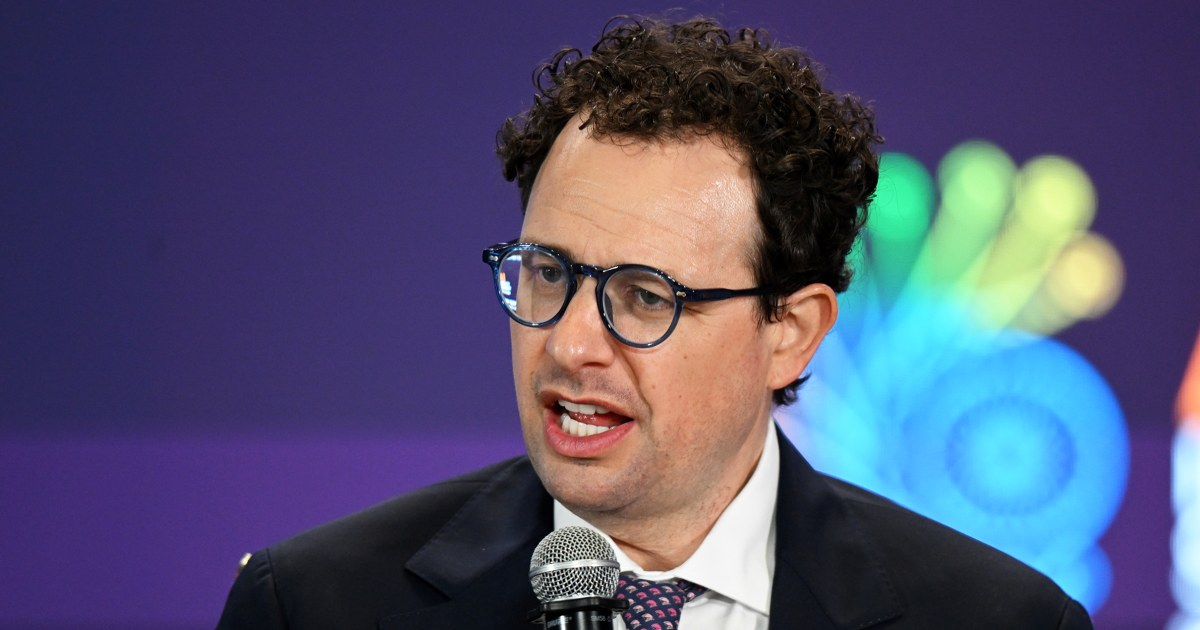
“For markets, the key question is whether this is the first sign that the extraordinary AI investment cycle might eventually moderate,” said Jim Reid, Deutsche Bank global head of macro research. “For now, that seems unlikely. The competitive race between companies and countries remains intense, and it’s difficult to imagine firms voluntarily stepping back while rivals continue to push ahead.”
Overnight, worries about slowing the AI industry hit South Korea’s benchmark Kospi index, which sharply fell more than 3%. That fall was primarily due to selling in AI memory firms. Samsung Electronics sold off by 5% and SK Hynix plunged more than 7.3%.
In Tokyo, shares of OpenAI investor SoftBank Group fell 10.7%.
The dramatic market moves followed the intervention by Anthropic CEO Dario Amodei, who wrote Saturday that AI companies “must slow the pace at which we improve the capabilities of AI models.”
“Progress will still seem fast, and we must make wise use of the time we gain,” Amodei added. He said “like many technologies before it, AI brings risks, and because it is such a powerful technology, these risks are serious.”
Amodei said the risks included “the risk of losing control of AI systems, misuse of AI for cyberattacks and bioterrorism, and serious economic disruption.”
“I agree with Dario,” Altman said on X shortly after Amodei’s post. Tech billionaire Elon Musk agreed with Altman, writing on X: “Dario is right.”
Shares of Musk’s SpaceX, which owns artificial intelligence developer xAI, fell more than 2% early Monday.
Altman later added in another post: “When we talk about ‘pacing’, we do not mean ‘stopping’.” He said “progress has been rapid and will continue to be.”
Amodei expanded on his thoughts Sunday. Speaking to CBS’ “Sunday Morning,” he warned that there are “real dangers.”
“I don’t think I fully just appreciated what it would actually be like when the progress was as fast as it was,” he said. It doesn’t mean we need to panic today. It doesn’t mean we need to shut it all down. But I would say it’s a warning sign.”
The Chinese Foreign Ministry overnight dismissed calls for a slowdown from the U.S. A spokesperson said that “fear-mongering” would only “disrupt the process of global AI governance and serve no one’s interests.”
00:00 00:00 How exactly could AI cause widespread danger? 02:35
President Donald Trump sounded a similar tone over the weekend. “I think you have a lot of very negative forces that are bringing it up that shouldn’t be bringing it up and they’re bringing up things that won’t happen,” he said Sunday, referring to putting guardrails on the industry.
Still, selling in AI companies continued to spread through the European trading session, where Germany’s DAX index closed down 0.5% and France’s CAC 40 index dropped 0.8%. The biggest decliners across European markets were AI-related, such as Belgium’s ASML, a critical supplier to chipmakers, whose shares declined 6.1%.
While AI worries were the primary driver of selling Monday, stocks are also dealing with the prospect of a Fed rate hike Wednesday.
U.S. core inflation, which does not count food or energy costs, on Friday rose more than expected, which was viewed as many as the signal for the Federal Reserve to hike rates. Market odds for a hike currently sit at about 85%.
At the same time, bond yields have surged this year and, on Monday, the U.S. 30-year Treasury bond yield reached 5.38%, its highest level since 2007.
The 10-year Treasury yield, which heavily influences consumer borrowing rates rose to as high as 5.014%, it highest level since 2023 and very near its highest level since late 2007.
However, just like stocks, yields sharply reversed late in the morning and by midday were back to their lowest levels since Friday.
The rise in bond yields comes as oil, gas and diesel prices remain sharply elevated. It also comes due to what many view as a crisis of credibility at the Fed and unusual interventions in markets from the Treasury Department.
“Oil and AI are back in focus,” HSBC’s chief multi-asset strategist Max Kettner said Monday in a note to the bank’s clients. However, he said “calls for a slower AI build-out and resulting fears for the tech sector are overblown in our view.”
Tech stocks have become highly sensitive to interest rates as those firms tap the public debt markets to raise hundreds of billions of dollars to expand AI data centers around the world. Even small rises in interest rates can cause billions of dollars in extra costs.