Nvidia (NASDAQ: NVDA) has been gaining momentum recently. Shares have surged more than 12% since the start of August. The move has brought Nvidia's market cap back to $5.5 trillion, just 4% below its all-time high.
Investors are piling back into Nvidia stock as they begin to believe what CEO Jensen Huang has been saying. Some may have thought his predictions about artificial intelligence (AI) infrastructure spending were exaggerated, but now Huang is steering it toward reality.
Missed Nvidia in 2009? This Rare Signal Is Flashing Again. In 2009, a "Double Down" signal flashed for a little-known chipmaker called Nvidia. For the first time in years, that same "Total Conviction" signal is flashing for a company 1/100th the size of Nvidia. Continue »
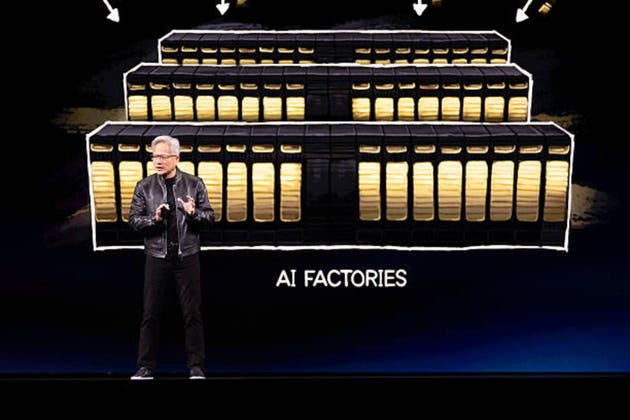
Nvidia CEO Jensen Huang. Image source: Nvidia.
From $500 billion to $1 trillion
At Nvidia's GTC conference in March, Huang said he sees at least $1 trillion in revenue from Nvidia's next-generation AI chip platform and systems through 2027. That's twice the demand he saw last year, thanks to what he called the arrival of the inference inflection. Nvidia's core advanced Blackwell and Vera Rubin chip architectures satisfy that demand.
Even his previous $500 billion revenue prediction was hard to wrap one's thoughts around. To predict sales of at least $1 trillion through next year seems incomprehensible. But Jensen Huang is proving to be uniquely capable of laying the groundwork for those massive investments.
On Aug. 10, Huang revealed that he brought together the leaders of six of the largest global financial firms to form a partnership to finance AI compute infrastructure and attract more than $500 billion in external capital. Huang's premise is that computing power is becoming a marketable asset, and Nvidia has the tools to drive the market higher.
Financing the boom
The agreements consist of memoranda of understanding (MOUs) with firms such as Goldman Sachs, KKR, and BlackRock, and their implications are significant. Jensen Huang's comment below should help show investors how valuable Nvidia is, and why its stock can keep rising from here. Huang stated:
Nvidia has reached an important milestone. We began by building chips; today, we are helping create a new class of productive, investable infrastructure: AI factories. In AI, compute is revenue. Nvidia compute is uniquely suited for this role.
To be clear, Nvidia likely won't even reach $500 billion in revenue this year. It may get close, though, with the company's fiscal year ending in late January. For fiscal Q2, due to be reported later this month, the company estimates revenue of around $91 billion, about 11.5% higher than Q1. Even if sales continue to increase 12% sequentially quarter to quarter, Nvidia will still report revenue just shy of $400 billion this fiscal year.